I'm Manually Writing Emails Like an Idiot
Written by: Darrell Gardiner | Sat Dec 06 2025We have over 2,000 users now on Clipflow. Most growth hackers on Twitter says I should automate my outreach. Most SaaS playbooks says founder time is too precious for manual emails. Every course, every template, every "scale smarter" guru tells me to build sequences and optimize open rates. I'm ignoring all of them.
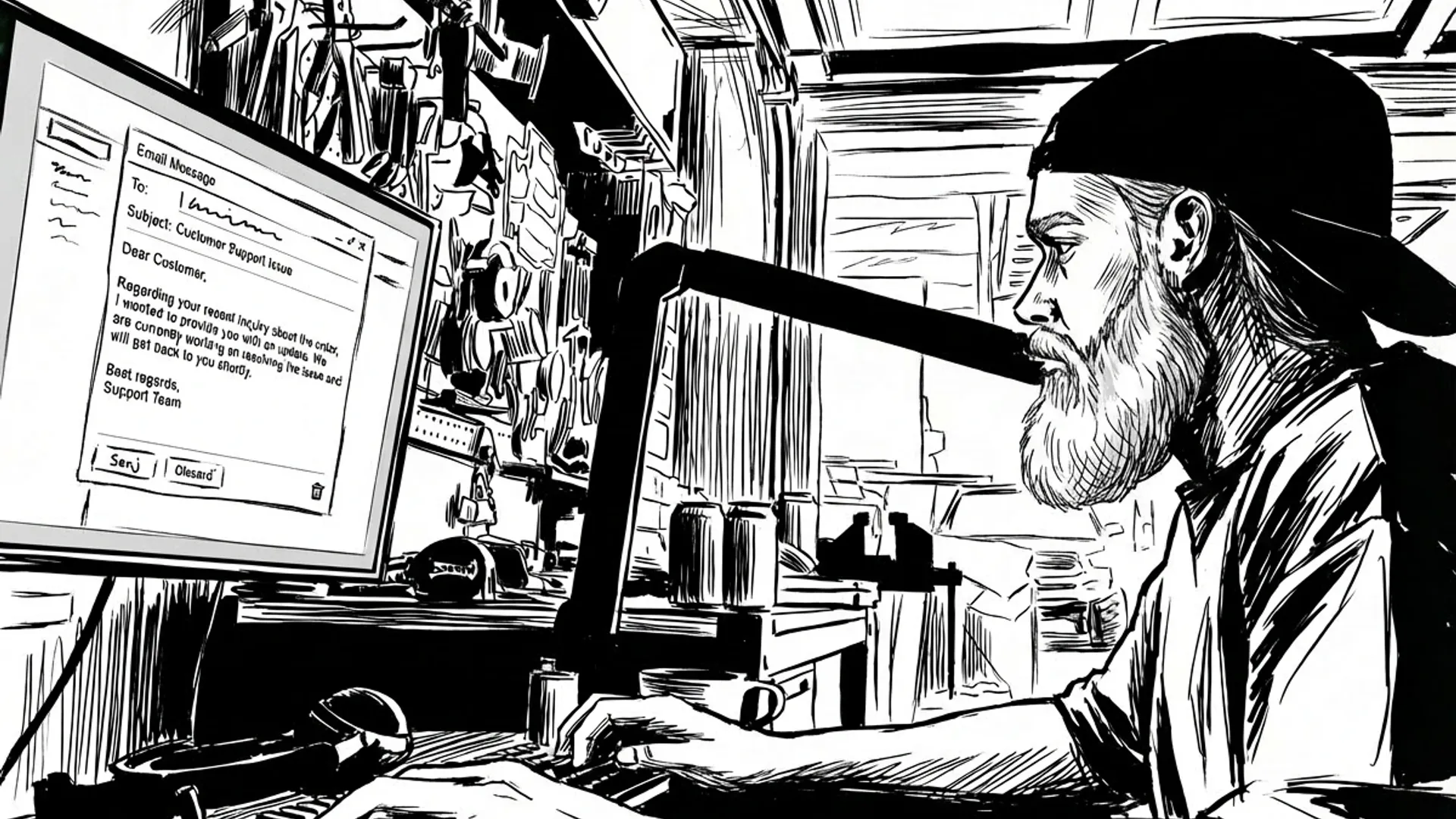
We have over 2,000 users now on Clipflow.
Most growth hackers on Twitter says I should automate my outreach.
Most SaaS playbooks says founder time is too precious for manual emails.
Every course, every template, every “scale smarter” guru tells me to build sequences and optimize open rates.
I’m ignoring all of them.
The Automation Religion
The playbook is everywhere:
- Set up Intercom.
- Build drip campaigns.
- A/B test subject lines.
- Track open rates.
- Segment by behavior.
- Optimize for conversion.
Automate everything because “you need to focus on the product.”
Sounds smart. Feels efficient. Felt right for me for awhile too.
It’s killing your business.
What Actually Happens When You Automate Too Early
You send 1,000 perfectly optimized emails.
You get a 23% open rate. Marketing celebrates.
Zero conversations happen.
You learn nothing about why people signed up, what they expected, where they got stuck, or what would make them pay.
You optimized the wrong thing.
Your open rate went up.
Your understanding of your customer went nowhere.
What We’re Doing Instead
Our Slack pings when someone signs up. The webhook includes:
- Name, email, company
- Whether they verified
- Whether they invited teammates
- Whether they completed onboarding
Every morning I copy-paste this into Claude:
“Prioritize these signups for founder outreach.”
Claude organizes them:
High Priority:
- Invited 3+ teammates (high intent)
- Matches our ICP (content teams)
- Completed onboarding
- Real company domain
Medium Priority:
- Verified but solo
- Partial onboarding
- Possible ICP match
Low Priority:
- No verification
- No activity
- Clear mismatch
Then I email every single one. Personally.
High priority gets 10 minutes: I research their company, reference their use case, offer a call.
Low priority gets 2 minutes: Short personal note. Because you never know.
15 minutes a day.
Could be instant with automation.
Won’t be.
This doesn’t scale.
Want to know what else doesn’t scale?
Building features nobody wants because you automated away every signal that could have told you what to build. Your product is only what it is right now. The only way it becomes what it should be is through conversations you’re too “efficient” to have.
We could webhook this into Zapier. Trigger sequences in HubSpot. Track everything. Optimize relentlessly. But we’re not optimizing for email metrics. We’re optimizing for learning what our customers actually need.
There’s plenty of lord businesses out there doing this. Not scrappy startups. They’re at scale and still managing because they realized it might be the highest leverage activity for the entire day. They have the resources to automate everything.
They choose not to. And some people do automate, but through the founder, which is the next level from this.
I’ve received founder emails, LinkedIn and instagram from Close, Clay, FolkCRM. Did I reply to most? No.
But when I had a real problem, I knew I could reach them. That feeling matters more than your 23% open rate.
The Actual Cost of “Efficiency”
We believed the automation narrative for months. I was “too busy building” to manually reach out, luckily Ken was the whole time. We had automated onboarding emails. Help docs. Intercom sequences.
We thought that was enough.
It wasn’t.
Now I have a backlog of 200+ signups from the past 90 days who I never contacted personally.
They signed up. Invited their teams. Started projects. Hit friction. Churned.
Now it’s time to ask: “What did you need that we didn’t have?”
Some of them were probably our ideal customers. Some probably had feedback that would have changed our roadmap. Now I’ve gotta find out, with likely a lower potential response rate than if I’d hit them the day they signed up and the day their trial expired.
When Automation Actually Makes Sense
Later, and in some areas. But we might always do this in some capacity non-automated. Might eventually move to only manually contacted the tier ones. But there’s still a lot to learn from the less perfect users too, they still signed up for something. Maybe we can give it to them.
If you can’t find 15 minutes to reach out to your trial users?
You’re in a bad spot.
You’re over-optimizing for scale you haven’t earned yet.
The Process (Steal This)
- Capture signup data: Slack webhook with key fields
- Daily review: 15 minutes every morning
- Paste into Claude: “Prioritize these for founder outreach”
- Email everyone: 10 min for high priority, 2 min for low
- Track insights, not metrics: Real conversations, not open rates
Could this be faster? Yes.
Should it be? Not yet.
If you automate too early you might never learn:
- Where people get stuck (not where we thought)
- What features they expected (not what we built)
- Why they invited teammates (not why we assumed)
- What would make them pay (not what our pricing page says)
None of this shows up in your email analytics.
Every man and his dog is preaching automation.
They’re wrong.
Manual doesn’t scale. But neither does guessing what your customers need.
The companies crushing it right now didn’t automate their way to product-market fit.
They talked their way there.
Stop optimizing open rates. Start having conversations.
Your product depends on it.
More Content

The Only Advice I'd Actually Take From Jeff Bezos
So there's no business that ever started without someone having a really good idea. It's very common that founders typically think that their ideas are their value to the company. It's one of the
2025-11-14

How to Build a Truly Timeless Brand in 2025
How does a brand get worldwide recognition before the internet even exists? Cokes existed longer than anyone on earth has been alive. And apparently the guy who created it did use it to kick a
2025-10-23
Don't start your business without these 3 things...
We built a business that ended up being in five offices across three countries to leave and build something here. That's right in the garage. Cuz the most important thing is when you're trying and
2025-10-09