Don't start your business without these 3 things...
Written by: Darrell Gardiner | Thu Oct 09 2025We built a business that ended up being in five offices across three countries to leave and build something here. That's right in the garage. Cuz the most important thing is when you're trying and
After scaling a business across five offices in three countries, I’ve made the decision to start over - from a garage. While this might seem like a step backward to some, it’s a deliberate choice rooted in valuable lessons learned. Here’s what I’m carrying forward and what I’m deliberately leaving behind.
What I’m Keeping:
-
Calculated Delusion (Positive Confirmation Bias) I wasn’t naturally inclined toward entrepreneurship, but working with three delusionally optimistic brothers changed my perspective. That touch of “insanity” helped push through the darkest days. Now, having succeeded once, I’m bringing that reinforced belief forward.
-
Lean Philosophy
- Keep products focused on core customer needs
- Maintain minimal but high-performing teams
- Embrace modern tools and automation
- Stay competitive against both established players and nimble solo operators
- Curiosity and Hands-On Approach
- Willingness to explore new ideas
- Not being “too good” for any task
- Learn, do, teach, delegate
What I’m Leaving Behind:
-
Past Judgments The business landscape constantly evolves. Previous experiences shouldn’t lock us into fixed mindsets about what works and what doesn’t. Technologies improve, situations change, and people grow.
-
Management Layers More managers often meant worse communication between strategy and execution. The focus now is on bringing in star players earlier and maintaining a flatter structure.
-
Self-Doubt
- No more quiet acceptance in meetings
- Better articulation of ideas and their reasoning
- Standing firm on matters of importance
- Leveraging earned confidence
Key Takeaways: • A touch of delusion can be beneficial in entrepreneurship • Stay lean in both product and team structure • Remain adaptable and open to change • Value direct communication over hierarchical structures • Build confidence through experience
If you don’t see me again, thanks for stopping by. Stay curious.
Video Summary - By AI:
Main Topic: Transitioning from a large business to a new startup venture
Purpose: Share key lessons learned and strategic approaches for the new venture
Key Insights:
- Positive confirmation bias can be beneficial for entrepreneurial resilience
- Lean operations are crucial in today’s competitive landscape
- Past experiences should inform but not dictate future decisions
- Flat organizational structures can be more effective than traditional hierarchies
Actionable Takeaways:
- Maintain some healthy delusion/optimism
- Focus on core customer needs
- Keep teams lean and efficient
- Stay curious and hands-on
- Build confidence through experience
Keywords: startup journey, business lessons, entrepreneurship, lean startup, business scaling, startup mindset, business transition, startup success, business evolution
Watch the Video
Show Transcript
We built a business that ended up being in five offices across three countries to leave and build something here. That's right in the garage. Cuz the most important thing is when you're trying and you're failing or you're succeeding, it's what you learn from it and what you take with you. So, this is three things I'm bringing with me and more importantly, three things I'm definitely not bringing with me that I think are going to help us while we grow the next business. First thing I'm bringing with me is confirmation bias. And I know what you're thinking. Confirmation bias? That's a bad thing, right? Well, not quite. Turns out there's some confirmations you might want to keep with you. Yes. And I was talking to a friend and he asked me, "Why do you think you take the risks you take?" I was never destined to be that guy who went out and started his own business and went and did anything substantial outside. I'd thought about freelancing and always, to be honest, felt a little bit afraid by it. But I happened to fall into a job where I was working with three people, three brothers who had a certain sense of delusion about them. This feeling that you could do it even though you sort of doubted yourself every day. And I think a lot of that delusion absorbed into me through working with these people for a really long time. And I do believe that you need to have a little bit of delusion, a little bit of insanity to carry you through the hardest days, the doubtful days, the times when you don't think you're going to make it. That delusion is in the back of your head saying like, I can do this. And now I'm coming into that second business with the reinforcement that I've done it before. It's happened before. It can probably happen again. And I know that that could be a very very dangerous confirmation bias to bring with me, but I'm bringing it with me anyway because it will get you through the darkest days. So if you're thinking of doing the same, whether it's your first business or your second business, make sure you're bringing a little bit of delusion with you. The second thing I'm absolutely bringing with me is keeping everything lean. It's something we did from necessity in the last business, but this time we're going to be deliberately doing it as much as possible the whole way through. So this is both keeping your product lean and keeping your team lean. Keeping the product lean is only doing the things that the customers really, really need. setting aside a lot of the assumptions about what a customer wants versus what actually gets the job done for them. Because if you align to exactly what the customer wants to get done, you're going to have a much better time. And you won't spend and waste your resources doing something that's a nice to have, which to be honest, anyone can do. And keeping the team lean is doing as much as you can with as few resources as possible. Because while I don't think AI is quite there yet for getting any real substantial work done and the A players are always going to outperform, you're going to be able to have less A players and you're going to need less people doing the day-to-day tasks in the future. With the rise of tools like chat GPT, Claude, Cursor, no code tools like lovable, all of the barriers to entry are dropping. Some solo kid in a bedroom could spool up a similar app in a weekend. what's not necessarily a complete competitor. You might have a substantially better product, they'll take enough of the attention away and they can definitely out compete you on pricing because they'll have lower outgoings. They're just one person building it. So, you're not just competing with the big boys anymore. You're competing with the small ones and they can have just as much of an impact on the competitive landscape overnight. We have to make sure we're getting as much done as we can with as few resources or we're going to lose. And if you're building a business, this is going to be exactly the same for you. You have to be aware that an almost no cost competitor can come at some point and either force you to do more work to develop something that competes with them or remove your customer base overnight. And then finally, I'm bringing curiosity and the freedom to explore. Spending a little bit too much time going down rabbit holes and exploring ideas created value in so many places in the last business. I want to maintain that I'm always willing to jump in and learn new things. and also not being too good for any task. Jumping in, doing it, trying it, learning it, then teaching it and delegating it later. Being interested to me means reading about it, learning about it. Being curious means going in and doing it. I think that's so important no matter what it is you're starting in any industry. But probably more important than the things I'm bringing is the things I'm not bringing. First up in the not bringing category is past judgment. I have a tendency and most people do, I think, have a tendency to assign meaning and permanence to things that have happened in the past. when people are always growing and changing and the situations are always growing and changing. My past experience and my current opinions form a really heavy weight and I believe you do have to learn from the past. But don't get locked into thinking just because something happened in the past it'll happen again. Because not only do you have to be reactive to new information, everyone else is reactive to new information as well. So when we were jumping into starting this business, I had assumptions about things that we hadn't done in the past or had said no to in our past business would immediately transfer into this business for no other reason than it was just in my head that it would happen that way. And this is like connecting APIs and integrations. In our past business, we did a social media thing that connected integrations. It sucked and I was worried that we weren't going to do it again in this business, but obviously the situation is different. The value to the customer is different and the technologies changed. It's gotten easier. all of these things. Old me would have made assumptions. New me is waiting, watching, and learning and expecting the change that I know I've grown as a person. I'm expecting that of everything. I've been blown away by being open to the experience of watching someone grow. Just how much everyone can grow and things change as time moves on and priorities change. So don't, like I almost did, get locked into assuming everything's going to be the same when literally everything changes all the time. And be really careful of decisions you make based on the past. The next thing I'm not bringing with me is managers. Not the people. The people were great. The thing I saw in our last business is the bigger we got and the more people we had that were getting the job done doing the thing, the more we needed managers and the more managers we had, the worse the sightelines between what was going on at the bottom level and the planning and strategy at the top was. So a priority for me in this business is to get more star players into the mix earlier so there's less need for management layers and things can stay a little bit flatter. So if you do have something unique about you, bit of a star player, even if you're too humble to admit it, you know where the comment box is. You know how to find me. I saw both sides what was good about each and I know what I want to keep from both. This is one of the reasons I'm bringing leanness with me to the next business and it's one of the reasons you should too because the reality of having a big corporate team is that things move slower and they can move slower in a bigger business because there's more revenue. There's more things happening. It just takes more time and more effort to get things moving in certain directions. But personally, I think the business, especially in the early days, benefits a lot more from being lean than from having more management and more people. And then finally, last thing I'm not bringing is this guy. I don't tolerate nos as much anymore. In the last business, I would hear no, and I would assign all my anxieties to it. I'm terrible. I'm evil. No one likes me. No one likes my suggestions. None of that stuff was true. And what I didn't realize at the time is I wasn't doing a good job explaining things well enough. I would go through all of the mechanisms in my mind of figuring out why something was a good idea, but then when it came time to sell the idea, I would just dump it as one sentence and then get really upset when no one wanted to listen to me. and anyone in their right mind wouldn't have listened because they didn't think through all the data, all the options, all of the strategy that I did. Old me also would stay quiet in meetings. So, if someone else spoke up, I would let things go that I care about and just say, "Ah, it's fine. Whatever." They'll they'll know better. I'm not letting things go as much anymore. Once we get to a size where we're having bigger meetings, I'm not just going to shut up. And you shouldn't either. When you care about something, don't let it all go down by the wayside because someone who's not as familiar with the matter speaks up and says something. I'm not hugely different in any substantial way to the person I was who was shutting down in those meetings. But what I do have now is years of confirmation that I might know what I'm talking about. And if I'd have had the same confidence I have now back then, I probably would have produced better results for the business. So, I'm chucking old me in the bin for this one and bringing everything that I spoke about at the start. And finally, as a little bonus, you might have seen from this video that I'm chucking away the guy who was afraid to talk on camera. We've been building our personal brands and the Clipflow channel while we're building the software. And that has required me to go outside my comfort zone and deliver information on camera. There's no better way to learn this stuff and to build confidence than just by going out and doing it. Nothing at all that I learned in 9 years scaling that business taught me anything that a school could have taught me because so much of what you learn and so much of what's important, you only learn in practice and by doing so. I would strongly suggest that you get out there. Even if it's in a lowrisk, low bet way, minimal outlay, whatever it needs to be, go and try and do something. Try and sell something. try and build something cuz you'll learn a lot and if it works out, I promise you, you'll be bringing the confirmation bias with you to the next one and you'll be driven to always keep doing it again just like I am. Hope something in this helped. If the algorithm is friendly to us, I might see you again. If not, thanks for stopping by. Peace.
More Content
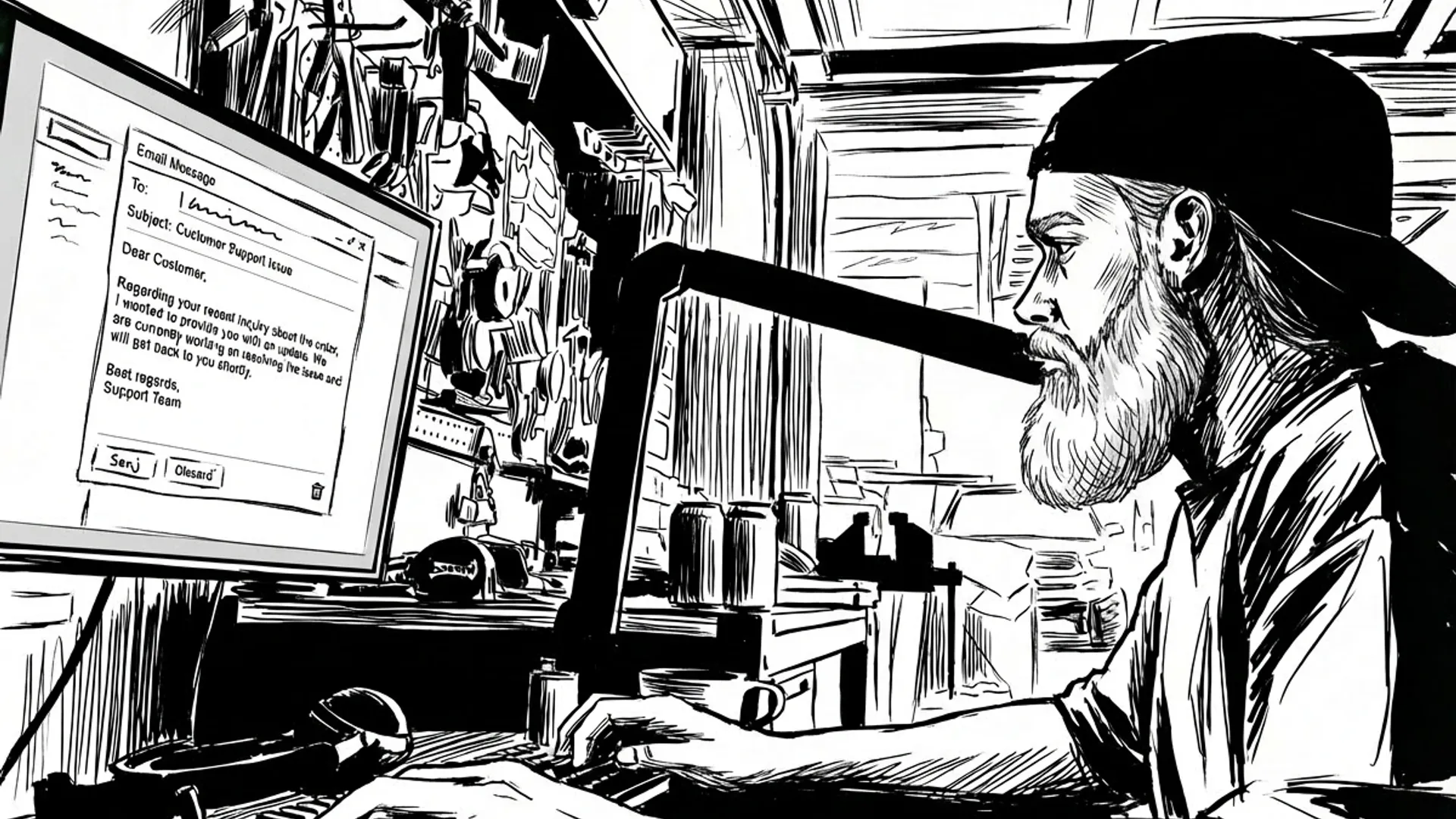
I'm Manually Writing Emails Like an Idiot
We have over 2,000 users now on Clipflow. Most growth hackers on Twitter says I should automate my outreach. Most SaaS playbooks says founder time is too precious for manual emails. Every course, every template, every "scale smarter" guru tells me to build sequences and optimize open rates. I'm ignoring all of them.
2025-12-06

The Only Advice I'd Actually Take From Jeff Bezos
So there's no business that ever started without someone having a really good idea. It's very common that founders typically think that their ideas are their value to the company. It's one of the
2025-11-14

How to Build a Truly Timeless Brand in 2025
How does a brand get worldwide recognition before the internet even exists? Cokes existed longer than anyone on earth has been alive. And apparently the guy who created it did use it to kick a
2025-10-23