How to Guarantee Luck. 60% of the time, it works every time.
Written by: Darrell Gardiner | Sun Jul 06 2025Creating your own luck is on the top of my mind at the moment because we are investing heavily in creating content and creating as much content as possible so that we're not invisible. So there's
I’ve been thinking a lot about luck lately, particularly as we invest heavily in content creation to maintain visibility. There’s an interesting concept called the luck equation by Jason Roberts that states: luck = doing × telling.
This resonates deeply with our current strategy. You can be building the most incredible product, but if you’re invisible, you might as well not exist. The harsh reality is that the world runs on our ability to sell things and generate revenue. Without this fundamental truth, none of the platforms or devices we use daily would exist.
Our Current Approach:
- Creating content about general business experiences
- Developing targeted content for our specific user base
- Documenting our building process and rationale
- Maintaining consistent branding across all platforms
I’ve noticed that many founders fall into the trap of believing their product isn’t good enough when growth stalls. The reality is often different - it’s not about adding more features, it’s about being seen. Marketing is frequently the missing piece, not product development.
What looks like luck to outsiders is usually the result of consistent effort below the surface. That viral tweet? Probably backed by years of writing practice. That “lucky” partnership? Likely the result of countless hours of putting yourself out there.
Key Learnings:
- Visibility creates opportunities for “luck”
- Document your journey - it becomes valuable archive
- Maintain consistent branding across platforms
- Focus on shareability in content creation
- Build in public to create trust and credibility
Remember: You can’t get lucky sitting in bed doing nothing. You have to increase your surface area for luck through consistent action and visibility.
If you don’t hear from me again, thanks for stopping by. Stay visible.
Video Summary - By AI:
Main Topic: The relationship between luck, visibility, and success in business through the lens of the “luck equation” (luck = doing × telling)
Key Insights:
- Invisibility is detrimental to business success regardless of product quality
- What appears as luck is often the result of consistent work and visibility
- Growth limitations often stem from marketing issues rather than product issues
- Documentation and public sharing create opportunities for connections and growth
Actionable Takeaways:
- Consistently create and share content
- Maintain unified branding across platforms
- Document your journey and learnings
- Focus on increasing visibility in your target market
- Create shareable content that provides value
Keywords for SEO: #BuildInPublic #ContentCreation #StartupGrowth #BusinessLuck #Entrepreneurship #VisibilityStrategy #ContentMarketing #BusinessGrowth #StartupMarketing #PersonalBranding
The video emphasizes the importance of combining active development with public visibility to create opportunities often mistaken for luck in business growth.
Watch the Video
Show Transcript
Creating your own luck is on the top of my mind at the moment because we are investing heavily in creating content and creating as much content as possible so that we're not invisible. So there's something called the luck equation. So Jason Roberts says that luck equals doing times telling. If you're doing something, if you're building something, you're writing something, you're creating something, you're shipping something, that's one component. And then the second component is telling. So that's sharing what you're doing publicly, storytelling, showing your work, building in public. If you only do and you never tell anyone about it, well then you're invisible. And being invisible these days is a fate worse than death because you could have the best engineers, the best product on the planet. If you're invisible, no one knows about it. And unfortunately, the entire world works on being able to sell things and make money from them. Otherwise, none of this would exist. Not the platform you're watching this on, not the phone that you're watching it on, devices, anything. We are investing really, really heavily in content, in talking about stuff. Now, there's a couple of paths that we're going down. We're going down the path of just talking about random stuff that happens. That's something that proves that the system that we're building works. And it's not talking directly about what we're building, but it is helping build a public profile, um, reduce the invisibility while using the tool to enable us to make a ton of content. as business owners. That's one key. And then the other one is like there's a strategy around doing content that's very focused on what the type of users we have will need. And then even more stuff on what we're building, why we're building, how we're building it. If you're invisible or like if you're too invisible for your ambitions of users, you're not going to be able to grow. You're going to get to a point where you can't grow any further and you're going to probably, if you're anything like us, you're going to look at the stalling of growth and you're going to say, "Well, the product's not good enough yet. We need to make more features. We need to make more things better." And this is something that me and Ken talk about all the time is like cuz he like he hears it from Hormosi. It's all over the like all over the place. What you need to be focusing on probably isn't improving the product and it's probably getting seen. it's probably marketing and that's where the like the growth cap comes in. People need to be able to see what you're building. They need to hear you talk about it and they need to hear you sharing it. And this is where luck comes in as a byproduct of building plus talking about it. Luck when you say like, "Oh my god, they got so lucky." Like you see something blow up and you're like, "Oh my god, I got so lucky." It's disguised as luck because you didn't see the hard work that was happening under the surf. Having a tweet blow up and it goes absolutely viral. Oh, they just made one tweet and that's all they did. No, you didn't see the eight years that they've been practicing writing engaging content. You didn't see all of the learning they've been doing to make sure that the product they were doing was exciting enough to get talked about online. It could be that you like you make a tweet and that somehow turns into a partnership. It could be that you do a podcast episode that gets shared by someone and gets you an early investor you weren't expecting or building some sort of tiny tool and that becomes your whole SAS product. Like all of those things might look like luck, but they are a byproduct for they're a byproduct of showing up, doing something, and talking about and demonstrating that you can do something, talking about it by putting yourself out there. You're building open loops for everyone else. People will start to associate you with a specific niche, um, specific problems, and specific energy. They'll get to know you, and then when something relevant crosses their path, you get the intro. So this happened where Ken was making coding content and he spoke about what he was building Clipflow being for content creators. Someone who incrementally watches his coding videos saw the thing was for content creators had a friend who is a content creator and was like dude I got to put you two together because a person human being wants to provide value to people. So if they see something that they think is going to be valuable to someone else or they want to talk about with someone else, they're going to share it with them. And this is why in the algorithms like Instagram, Tik Tok, and YouTube, everyone's talking now about sharability and how sharable your content is because people want to be seen as the person with the info, with the useful tools, with the the helpful hints that will help the person. If you're not putting yourself out there and you're not catching all of those people who aren't necessarily your core user, like it's really easy to get focused on, I'm just doing this. I just want to do content for just the core user. If you're not getting all the other people and as much as possible like new audiences, unlocking new audiences with different types of content, then you don't get that byproduct of that like open loop in someone's head of like, oh, these people make stuff about content. The next time they talk to someone who makes content, they're like, "Oh yeah, I heard about these guys who do this thing." It doesn't matter that they're not your user. Doesn't matter that they're not your target demographic. There's a lot of value in that. You see this happen all the time where say for example an indie hacker, someone who is a software developer posts something on Twitter, cool little micro tool um gets picked up by a little bit of the hive mind and gets a lot of engagement. That engagement leads to a founder like me for example. So this this happened we didn't end up acquiring the business but I tried to acquire the business. Um I saw a YouTube video of a guy talking about a tool for YouTube uh that was it was sponsorship tracking. So I think the site was sponsorship.so. Um I saw that video and I immediately reached out to him. Couple of reasons. It was in our space content creation and it was built on Rails which I thought was interesting because we also built on rails. Um started a conversation with him purely based off that one video. If he hadn't made a video talking about what it was and like the video didn't even have that many views, 400 500 views, but YouTube knew that was a topic for me. clicked it straight away, watched your thing, got really interested and I contacted him straight away and said like, "Do you want to sell it? Do you want Aquaire?" Whatever it might be. I don't know if I offered aquaire. I think he just like sort of played around with the idea of selling it. And he's like, he's a builder. He wants to build something. That's what he wants to build. So, it didn't really like sit right with me to be like, I'm going to take this and give you money. Um, because he's still excited building. I said, if you ever get unexited with building it anymore, reach out and we'll have the conversation again. um just by talking about what he was building, he got an offer that like to be honest, if he had a price and he wanted to get out, that could have been $50 to $100,000 um just for doing a thing, talking about doing a thing. So you could say that it was luck that someone happened to see it and wanted to buy it. But I would say that that's all manufactured luck from building something in a space someone's interested in and then talking about building the thing. All you really need to be doing is increasing your surface area for luck as much as possible. You have to be out there doing things to get lucky. You can't get lucky sitting in bed doing nothing. The things that we're doing anyway to increase the surface area of our luck is documenting and creating. So behind the scenes of what we're building is really important to us. Reflecting on things we've learned and archiving them. So having what we didn't have in our last business is the ability to look back on everything and have it all there. So there's a couple of photos couple of things we wrote or did at the time, but you lose a lot of the the business when you don't record it. So, one really good thing about reflecting in public and posting in public is you get to archive all of your learnings. Um, you get to talk about your learnings and people get to see like, oh, they learned this lesson from this experience. I resonate with that and then they become that pool of people that could refer you to someone. Being findable is obviously really important. We initially we had a YouTube channel that was just me and Ken talking about stuff and we decided to rebrand it to Clipflow Crew because we realized that there was a missed opportunity there for branding where like we want the name out there. It doesn't matter in what capacity it's getting out there whether it's specifically talking about the software or it's us just talking about things we're interested in. We had to keep all of the company handles and things clear. And like that that's goes as far as like if you're going to post things on LinkedIn under your name, make sure all of your other socials are in your name. So if someone looks you up on Google, they see your LinkedIn, they see your other things and it's all your name. Um, same thing for the company. You want all the company handles to be something that's the same and recognizable. By being out there, people can find you. They can. A lot of the time it's just a proving that you're real. Prove that you're legit by having all of the business cards, the digital business cards of owning all the social profiles. Obviously, having a website out there now, like I'm about to go through and redesign the whole website, but having our website out there has let people see things, go to the website, and they may or may not convert, but they know about the product more. They can learn about the product more. and then just shipping it as much as off as as much as possible as often as possible. So getting product in the hands of users as much as possible as often as possible because the more we ship things out and the more we learn, the more we can talk to the things that we've learned and the things that we've shipped. Even if there's something wrong and like in the end of the day users don't really connect with it and they don't use it, you get to talk about the reason you built the thing, show the audience that you built that thing because you understand their pain points and whether or not it's a like a serious painoint, one that they'll pay for doesn't matter as much as the fact that you've identified and built for their pain point. And then you will get lucky by showing up in that way. The other thing I've been trying to do and getting the other boys to do is like just responding to other people's work in the way that we would want to be responded to. So even if you're not a core user, saying the things that you like about it, opening up conversations because you never know who is or isn't a customer, especially in our space where we know that like businesses need to create more content. So you see a SAS platform and you're like, I like this about, I don't like this about it. They're not making content. They realize later they make the content and they immediately connect like Clipflow. It's about getting in the in the public perception or the sphere as the go-to result for the the go-to product to get the result that you want. And we know what result we want to deliver for people. So, we just need to be the the company that's thought of there. And you don't get that by not showing up and not being out there. Um, as annoying as it is sometimes to scroll through social media platforms because it can be a massive time drain, getting value out of it, you can get huge amounts of value out of it. And the people that aren't your customers now can become your biggest customers later. And they only become your biggest customers, not because of all the marketing work you do in the future, but because of the groundwork you did back here. The other one which I've been battling with is being the node or the central hub of communication for these things. And that would be like hosting meetups, doing courses, communities, and stuff like that. And I want to stay away from it until we can invest full effort into it because I don't want to do a dud one on the other side by being the node. Like another way of achieving being the node I think is that we could just be the place that has all the resources. So everyone is always sharing resources from their content creation channels onto things like Gumroad etc. Repackaging that without stealing it. So obviously all attribution, but just repackaging that as like an easy thing to deliver one every day because so many people making different things out there that are relevant for content creators and we can just signal boost them for the user that's making them. Um that'll make us more central to people be like, oh, they always have the best tools there. So that's something that I'm thinking about doing and that'll increase our surface area for luck to get lucky. You can't really control when luck will happen or how it's going to find you, but the more doors you leave open for luck to walk into, the better. So, try and get out there as much as you can. Build, talk about building, get lucky.
More Content
I'm Manually Writing Emails Like an Idiot
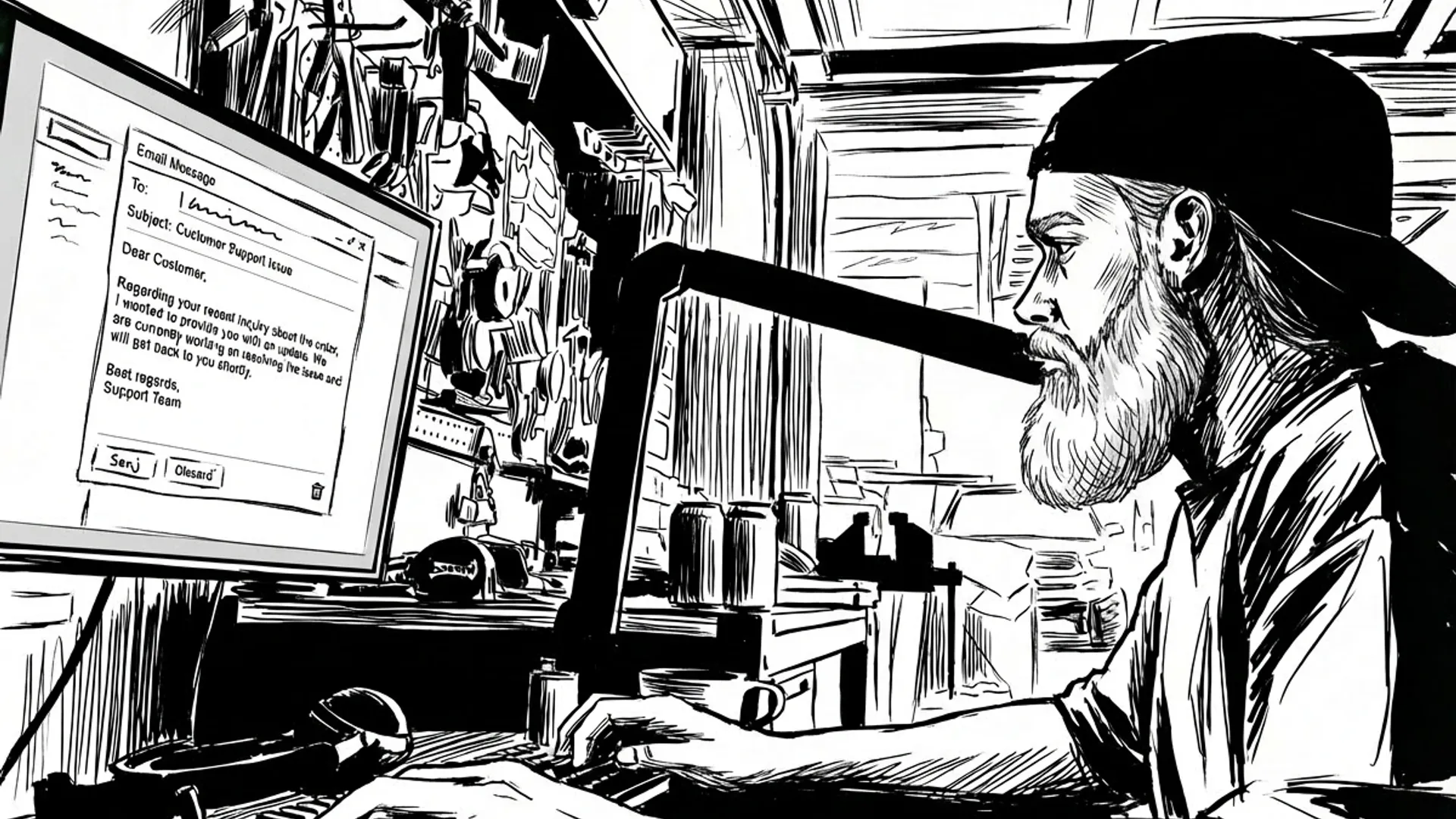
We have over 2,000 users now on Clipflow. Most growth hackers on Twitter says I should automate my outreach. Most SaaS playbooks says founder time is too precious for manual emails. Every course, every template, every "scale smarter" guru tells me to build sequences and optimize open rates. I'm ignoring all of them.
2025-12-06

The Only Advice I'd Actually Take From Jeff Bezos
So there's no business that ever started without someone having a really good idea. It's very common that founders typically think that their ideas are their value to the company. It's one of the
2025-11-14

How to Build a Truly Timeless Brand in 2025
How does a brand get worldwide recognition before the internet even exists? Cokes existed longer than anyone on earth has been alive. And apparently the guy who created it did use it to kick a
2025-10-23